Sorting
Source
Legimi
(1524)
Form of Work
E-booki
(1524)
Author
Shakespeare William
(43)
Burroughs Edgar Rice
(39)
Dickens Charles
(38)
James Henry
(32)
Wallace Edgar
(30)
Doyle Arthur Conan
(26)
Twain Mark
(21)
Plato
(20)
Verne Jules
(20)
Chesterton G. K
(17)
Kafka Franz
(17)
Wilde Oscar
(17)
Conrad Joseph
(16)
Dumas Alexandre
(16)
London Jack
(16)
Wells H.G
(16)
Wodehouse P. G
(15)
Allen James
(14)
Potter Beatrix
(14)
Wells H. G
(14)
Goethe Johann Wolfgang von
(13)
Kipling Rudyard
(13)
Baum Lyman Frank
(12)
Poe Edgar Allan
(12)
Shelley Mary
(12)
Tolstoy Leo
(12)
Aristotle
(11)
Cather Willa
(11)
Flaubert Gustave
(11)
Lovecraft H. P
(11)
Nesbit Edith
(11)
Tagore Rabindranath
(11)
Wharton Edith
(11)
Zola Emile
(11)
Dostoyevsky Fyodor Mikhailovich
(10)
Freud Sigmund
(10)
Hardy Thomas
(10)
Leblanc Maurice
(10)
Shaw Bernard
(10)
Woolf Virginia
(10)
Balzac Honoré de
(9)
Chekhov Anton Pavlovich
(9)
Kant Immanuel
(9)
Lang Andrew
(9)
Nietzsche Friedrich Wilhelm
(9)
Stoker Bram
(9)
Trollope Anthony
(9)
Unbekannt
(9)
Aeschylus
(8)
Collins Wilkie
(8)
Ebner-Eschenbach Marie von
(8)
Thoreau Henry David
(8)
Xenophon
(8)
Christie Agatha
(7)
Gaskell Elizabeth Cleghorn
(7)
Grey Zane
(7)
Ibsen Henrik
(7)
Montgomery L.M
(7)
Orwell George
(7)
Scott Walter
(7)
Stevenson Robert Louis
(7)
Alcott Louisa May
(6)
Austen Jane
(6)
Blavatsky H. P
(6)
Cooper James
(6)
Euripides
(6)
Fitzgerald Francis Scott
(6)
Hugo Victor
(6)
Lawrence David Herbert
(6)
Le Fanu Sheridan
(6)
May Karl
(6)
Proust Marcel
(6)
Rilke Rainer Maria
(6)
Sophocles
(6)
Spyri Johanna
(6)
Turgenev Ivan Sergeyevich
(6)
Voltaire
(6)
Zweig Stefan
(6)
Blackwood Algernon
(5)
Brentano Clemens
(5)
Burnett Frances Hodgson
(5)
Defoe Daniel
(5)
Dostojewski Fjodor Michailowitsch
(5)
Eichendorff Josef Freiherr von
(5)
Eliot George
(5)
Fontane Theodor
(5)
Forster E.M
(5)
Fortune Dion
(5)
Gibran Kahlil
(5)
Haggard H. Rider
(5)
Howard Robert Ervin
(5)
Mann Heinrich
(5)
Montgomery Lucy Maud
(5)
Rinehart Mary Roberts
(5)
Robert Musil
(5)
Webster Jean
(5)
Aquinas Thomas
(4)
Baum L. Frank
(4)
Bronte Charlotte
(4)
Carroll Lewis
(4)
Year
2020 - 2025
(1524)
Country
Poland
(1524)
Language
Polish
(1524)
1524 results Filter
E-book
In basket
Flatland: A Romance of Many Dimensions illustrated Edwin Abbott Abbott - Flatland: A Romance of Many Dimensions is a satirical novel. Written pseudonymously by "A Square", the book used the fictional two-dimensional world of Flatland to comment on the hierarchy of Victorian culture, but the novella's more enduring contribution is its examination of dimensions. Although it did not achieve popular success on its publication in 1884, Flatland gained a broad audience after the publication of Albert Einstein's general theory of relativity, which focused attention on the concept of a fourth dimension. The book enjoyed another renaissance with the advent of modern science fiction in the late 1930s and is now widely acknowledged as a pioneering work of mathematical fiction.
This item is available online. Expand information to see details.
Dostęp do treści elektronicznej wymaga posiadania kodu dostępu, który można odebrać w bibliotece.
E-book
In basket
Form of Work
Alexander III of Macedon Aléxandros III ho Makedn; commonly known as Alexander the Grea was a king (basileus) of the ancient Greek kingdom of Macedon[a] and a member of the Argead dynasty. He was born in Pella in 356 BC and succeeded his father Philip II to the throne at the age of 20. He spent most of his ruling years on an unprecedented military campaign through Western Asia and Northeastern Africa, and by the age of thirty, he had created one of the largest empires of the ancient world, stretching from Greece to northwestern India.He was undefeated in battle and is widely considered one of history's most successful military commanders.
This item is available online. Expand information to see details.
Dostęp do treści elektronicznej wymaga posiadania kodu dostępu, który można odebrać w bibliotece.
E-book
In basket
Form of Work
Agamemnon Aeschylus - This work has been selected by scholars as being culturally important, and is part of the knowledge base of civilization as we know it. Agamemnon is the first of the three linked tragedies which make up The Oresteia trilogy (comprising Agamemnon, The Libation Bearers and The Eumenides), the only surviving example of a complete trilogy of ancient Greek plays, by the ancient Greek playwright Aeschylus."Agamemnon describes the homecoming of Agamemnon, king of Argos, from the Trojan War, and his return to his wife, Clytemnestra, who had been planning his murder (in concert with her lover, Aegisthus) as revenge for Agamemnons earlier sacrifice of their daughter, Iphigenia.
This item is available online. Expand information to see details.
Dostęp do treści elektronicznej wymaga posiadania kodu dostępu, który można odebrać w bibliotece.
E-book
In basket
Form of Work
Choephori Aeschylus - Also known as 'The Libation Bearers' this is the second play of Aeschylus' Oresteia trilogy. Many years after king Agamemnon's murder at the hands of his wife Clytamnestra and her lover Aigisthos, his son Orestes returns home with Pylades to mourn at his grave. He has been living in exile and has come back to Argos in secret; his mission is to avenge Agamemnon's death.Orestes arrives at the grave of his father, accompanied by his cousin Pylades, the son of the king of Phocis, where he has grown up in exile; he places two locks of his hair on the tomb. Orestes and Pylades hide as Electra, Orestes' sister, arrives at the grave accompanied by a chorus of elderly slave women (the libation bearers of the title) to pour libations on Agamemnon's grave; they have been sent by Clytemnestra in an effort to ward off harm. Just as the ritual ends, Electra spots a lock of hair on the tomb which she recognizes as similar to her own; subsequently she sees two sets of footprints, one of which has proportions similar to hers. At this point Orestes and Pylades emerge from their hiding place and Orestes gradually convinces her of his identity.
This item is available online. Expand information to see details.
Dostęp do treści elektronicznej wymaga posiadania kodu dostępu, który można odebrać w bibliotece.
E-book
In basket
Form of Work
Prometheus Bound Aeschylus - Prometheus Bound is an Ancient Greek tragedy. In antiquity, it was attributed to Aeschylus, but now is considered by some scholars to be the work of another hand, and perhaps one as late as c. 430 BC. Despite these doubts of authorship, the play's designation as Aeschylean has remained conventional. The tragedy is based on the myth of Prometheus, a Titan who defies the gods and gives fire to mankind, acts for which he is subjected to perpetual punishment.The play is composed almost entirely of speeches and contains little action since its protagonist is chained and immobile throughout. At the beginning, Kratos (Authority), Bia (violence), and the smith-god Hephaestus chain the Titan Prometheus to a mountain in the Caucasus, with Hephaestus alone expressing reluctance and pity, and then departing. According to the author, Prometheus is being punished not only for stealing fire, but also for thwarting Zeus's plan to obliterate the human race. This punishment is especially galling since Prometheus was instrumental in Zeus's victory in the Titanomachy.The Oceanids appear and attempt to comfort Prometheus by conversing with him. Prometheus cryptically tells them that he knows of a potential marriage that would lead to Zeus's downfall. A Titan named Oceanus commiserates with Prometheus and urges him to make peace with Zeus. Prometheus tells the chorus that the gift of fire to mankind was not his only benefaction; in the so-called Catalogue of the Arts (447-506), he reveals that he taught men all the civilizing arts, such as writing, medicine, mathematics, astronomy, metallurgy, architecture, and agriculture.Prometheus is then visited by Io, a human maiden pursued by a lustful Zeus; the Olympian transformed Io into a cow, and a gadfly sent by Zeus's wife Hera has chased Io all the way from Argos. Prometheus forecasts Io's future travels, telling her that Zeus will eventually end her torment in Egypt, where she will bear a son named Epaphus. He says one of her descendants (an unnamed Heracles), thirteen generations hence, will release him from his own torment.Finally, Hermes the messenger-god is sent down by the angered Zeus to demand that Prometheus tell him who threatens to overthrow him. Prometheus refuses, and Zeus strikes him with a thunderbolt that plunges Prometheus into the abyss.
This item is available online. Expand information to see details.
Dostęp do treści elektronicznej wymaga posiadania kodu dostępu, który można odebrać w bibliotece.
E-book
In basket
Form of Work
Specimens of Greek Tragedy Aeschylus and Sophocles - Aeschylus, Sophocles - "Greek Tragedy" is meticulously edited collection of the most famous plays written by Aeschylus and Sophocles. Aeschylus (525/524 c. 456/455 BC) was an ancient Greek tragedian. He is often described as the father of tragedy. According to Aristotle, he expanded the number of characters in theater allowing conflict among them; characters previously had interacted only with the chorus. Sophocles (c. 497/6 406/5 BC) is one of three ancient Greek tragedians whose plays have survived. His first plays were written later than those of Aeschylus, and earlier than or contemporary with those of Euripides. Sophocles wrote over 120 plays. For almost 50 years, Sophocles was the most celebrated playwright in the dramatic competitions of the city-state of Athens. Contents: Prometheus Bound The Persians The Seven Against Thebes Agamemnon The Choephoroe The Eumenides Oedipus At Colonus Antigone Ajax Electra
This item is available online. Expand information to see details.
Dostęp do treści elektronicznej wymaga posiadania kodu dostępu, który można odebrać w bibliotece.
E-book
In basket
Form of Work
The Eumenides Aeschylus - Orestes, Apollo, and the Erinyes go before Athena and eleven other judges chosen by her from the Athenian citizenry at the Areopagus (Rock of Ares, a flat rocky hill by the Athenian agora where the homicide court of Athens later held its sessions), to decide whether Orestes's killing of his mother, Clytemnestra, makes him guilty of the crime of murder.
This item is available online. Expand information to see details.
Dostęp do treści elektronicznej wymaga posiadania kodu dostępu, który można odebrać w bibliotece.
E-book
In basket
Form of Work
The Persians Aeschylus - The Persians is an Athenian tragedy by the ancient Greek playwright Aeschylus. First produced in 472 BC, it is the oldest surviving play in the history of theatre. It dramatises the Persian response to news of their military defeat at the Battle of Salamis (480 BC), which was a decisive episode in the Greco-Persian Wars; as such, the play is also notable for being the only extant Greek tragedy that is based on contemporary events.
This item is available online. Expand information to see details.
Dostęp do treści elektronicznej wymaga posiadania kodu dostępu, który można odebrać w bibliotece.
E-book
In basket
Form of Work
The Seven Against Thebes Aeschylus - The Seven Against Thebes is the third play in an Oedipus-themed trilogy produced by Aeschylus in 467 BC. The bulk of the play consists of rich dialogues between the citizens of Thebes and their king Eteocles regarding the threat of the hostile army before their gates. The trilogy is sometimes referred to as the Oedipodea. It concerns the battle between an Argive army led by Polynices and the army of Thebes led by Eteocles and his supporters. The trilogy won the first prize at the City Dionysia. Its first two plays, Laius and Oedipus as well as the satyr play Sphinx are no longer extant.
This item is available online. Expand information to see details.
Dostęp do treści elektronicznej wymaga posiadania kodu dostępu, który można odebrać w bibliotece.
E-book
In basket
Form of Work
The Suppliants Aeschylus - The Danaids form the chorus and serve as the protagonists. They flee a forced marriage to their Egyptian cousins. When the Danaides reach Argos, they entreat King Pelasgus to protect them. He refuses pending the decision of the Argive people, who decide in the favor of the Danaids. Danaus rejoices the outcome, and the Danaids praise the Greek gods. Almost immediately, a herald of the Egyptians comes to attempt to force the Danaids to return to their cousins for marriage. Pelasgus arrives, threatens the herald, and urges the Danaids to remain within the walls of Argos. The play ends with the Danaids retreating into the Argive walls, protected.
This item is available online. Expand information to see details.
Dostęp do treści elektronicznej wymaga posiadania kodu dostępu, który można odebrać w bibliotece.
E-book
In basket
Form of Work
Japanische Märchen Karl Alberti - Aus der Einführung zu »Japanische Märchen« von Karl Alberti.Nicht mit Unrecht wird Japan als das »wunderbare Sonnenland« bezeichnet; denn neben seinen wirklich wunderbaren Naturreizen bieten Kunst und Literatur, ganz besonders die des Altertums, eine schier unerschöpfliche Fundgrube nicht nur für den wissenschaftlichen Forscher sondern auch für den Schöngeist. Gar reich, und nicht hinter der deutschen zurückstehend, ist die japanische Märchenwelt. Es ist dies meines Wissens das erste Werk, das aus dem reichen Märchenschatze Japans der deutschen Jugend eine sorgfältig zusammengestellte Auswahl bietet; mag auch das eine oder andere hier und dort einmal irgendwo veröffentlicht und dadurch bekannt sein, so ist dies doch meistens zerstreut in Zeitungen, Zeitschriften oder wissenschaftlichen Werken in wörtlicher Übersetzung erfolgt und nur für Erwachsene geeignet.Juki-onna Es waren einmal zwei Holzhauer: der eine hieß Nishikaze , dieser war ein älterer Mann, während der andere Teramichi hieß und noch ein Jüngling war. Beide wohnten im gleichen Dorfe und gingen jeden Tag zusammen in den Wald um Holz zu schlagen. Um in den Wald zu gelangen, mußten sie einen großen Fluß passieren, über den eine Fähre eingerichtet war. Als sie eines Tages spät mit ihrer Arbeit fertig waren, wurden sie von einem furchtbaren Schneesturm überrascht; sie eilten zur Fähre, mußten aber zu ihrem großen Schrecken sehen, daß der Fährmann soeben übergesetzt war und sich auf der anderen Seite des reißenden Flusses befand, von der er des rasenden Sturmes wegen vorläufig nicht zurück konnte. Da die Beiden im Freien das Ende des Sturmes nicht abwarten konnten, beschlossen sie in das nahebei befindliche Haus des Fährmanns zu gehen und dort dessen Rückkehr abzuwarten. Gesagt, getan! Im Hause angekommen, warfen sie sich zur Erde, nachdem sie Tür und Fenster wohl verwahrt hatten und lauschten dem Tosen des Sturmes. Der Ältere, ermüdet von des Tages Last und Arbeit, war bald in Schlaf verfallen; aber der Jüngere konnte kein Auge schließen, denn das Heulen, Brausen, Rauschen und Krachen war unheimlich und das Häuschen erzitterte in allen Fugen.Plötzlich gab es einen fürchterlichen Schlag, als wollte der Sturm das Haus zertrümmern, die Tür sprang auf und ein eisiger Wind mit einer riesigen Schneewolke drang herein. Entsetzt starrte Teramichi auf die Wolke, denn diese bewegte sich auf und ab und nahm endlich menschliche Gestalt an, die Gestalt einer Frau in weißem Gewande und wandte sich zu der Stelle, wo Nishikaze schlief; dort beugte sie sich zu dem Schläfer nieder, ihrem Munde entströmte ein weißer Nebel, der sich auf das Gesicht des Mannes ausbreitete, dann richtete sie sich auf und kam auf Teramichi zu, der, unfähig ein Glied zu rühren, die Augen angstvoll weit geöffnet hielt. Dicht vor ihm angekommen neigte sie sich nahe auf sein Gesicht und sah ihn ein Weilchen ruhig an; dann sprach sie leise, ihre Stimme war wie ein Hauch und ihr Gesicht nahm freundlichere Züge an: Deinen Kameraden 6habe ich getötet, wie alles, das in mein Bereich kommt. Auch du solltest sein Los teilen, doch bist du noch kein Mann und hast noch nicht gelebt. Drum sei verschont! Doch diese Schonung wird dir nur so lange Zeit, als du schweigen kannst. Kommt auch nur ein Wort von dem über deine Lippen, was du hier erlebtest, sei es zu wem es wolle, nicht Vater, nicht Mutter, nicht Weib noch Kind, niemand, hörst du, niemand darf erfahren, was hier geschah, so treffe ich dich, wo es auch sei! Denke daran!
This item is available online. Expand information to see details.
Dostęp do treści elektronicznej wymaga posiadania kodu dostępu, który można odebrać w bibliotece.
E-book
In basket
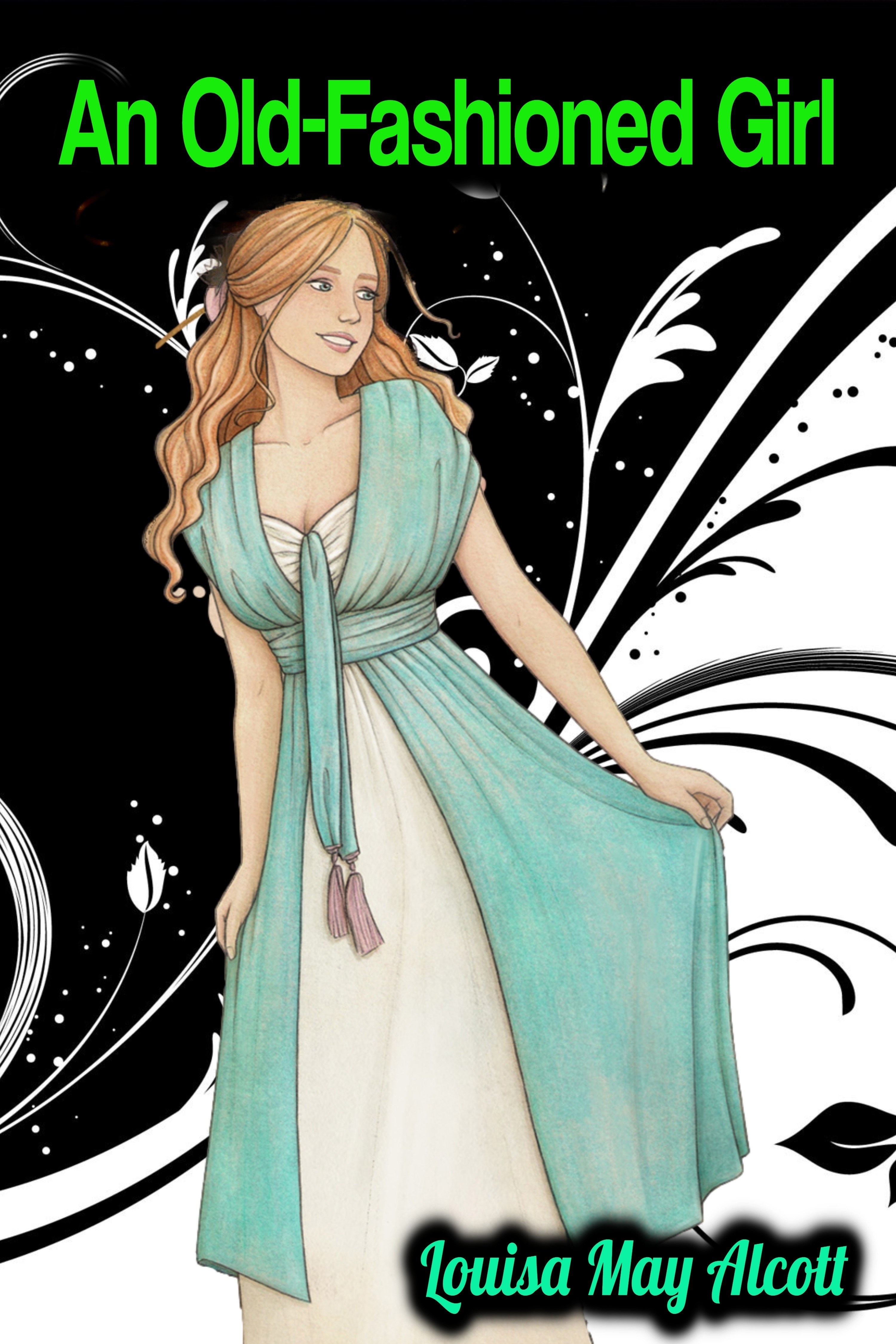
An Old-Fashioned Girl is a novel by Louisa May Alcott first published in 1869. The first six chapters of the novel were serialised in the Merry's Museum magazine between July and August 1869. Alcott added another thirteen chapters before publishing the novel. The book revolves around Polly Milton, the old-fashioned girl of the title, who visits the wealthy family of her friend Fanny Shaw in the city and is overwhelmed by their fashionable life they lead and disturbed to see how the family members fail to understand one another and demonstrate little affection. She is largely content to remain on the fringes of their social life but exerts a powerful influence over their emotional lives and family relations. The novel was the basis of a 1949 musical film starring Gloria Jean as Polly.
This item is available online. Expand information to see details.
Dostęp do treści elektronicznej wymaga posiadania kodu dostępu, który można odebrać w bibliotece.
E-book
In basket
Eight Cousins - Louisa May Alcott - Eight Cousins, or The Aunt-Hill was published in 1875 by American novelist Louisa May Alcott. It is the story of Rose Campbell, a lonely and sickly girl who has been recently orphaned and must now reside with her maiden great aunts (yet having a guardian), who are the matriarchs of her wealthy Boston family. When Rose's guardian, Uncle Alec, returns from abroad, he takes over her care. Through his unorthodox theories about child-rearing, she becomes happier and healthier while finding her place in her family of seven boy cousins and numerous aunts and uncles. She also makes friends with Phebe, her aunts' young housemaid, whose cheerful attitude in the face of poverty helps Rose to understand and value her own good fortune.
This item is available online. Expand information to see details.
Dostęp do treści elektronicznej wymaga posiadania kodu dostępu, który można odebrać w bibliotece.
E-book
In basket
Flower Fables - Louisa May Alcott - Flower Fables contains wildly imaginative stories that grew out of Alcott's experience as a storyteller to the children of her Concord, Connecticut, neighbors. Through these enticing encounters with fairies, elves, and animals, the author creates a foundation for young people based on the themes of love, kindness, and responsibility...
This item is available online. Expand information to see details.
Dostęp do treści elektronicznej wymaga posiadania kodu dostępu, który można odebrać w bibliotece.
E-book
In basket
Jack and Jill Louisa May Alcott - This carefully crafted ebook: "Jack and Jill (Children's Classic)" is formatted for your eReader with a functional and detailed table of contents. Jack and Jill: A Village Story is a children's book. It takes place in a small New England town after the Civil War. The story of two good friends named Jack and Janey, Jack and Jill tells of the aftermath of a serious sledding accident. Extract: ""Clear the lulla!" was the general cry on a bright December afternoon, when all the boys and girls of Harmony Village were out enjoying the first good snow of the season. Up and down three long coasts they went as fast as legs and sleds could carry them. One smooth path led into the meadow, and here the little folk congregated; one swept across the pond, where skaters were darting about like water-bugs; and the third, from the very top of the steep hill, ended abruptly at a rail fence on the high bank above the road." Louisa May Alcott (1832-1888) was an American novelist and poet best known as the author of the classic Little Women and its sequels Little Men and Jo's Boys. Alcott was an abolitionist and a feminist.
This item is available online. Expand information to see details.
Dostęp do treści elektronicznej wymaga posiadania kodu dostępu, który można odebrać w bibliotece.
E-book
In basket
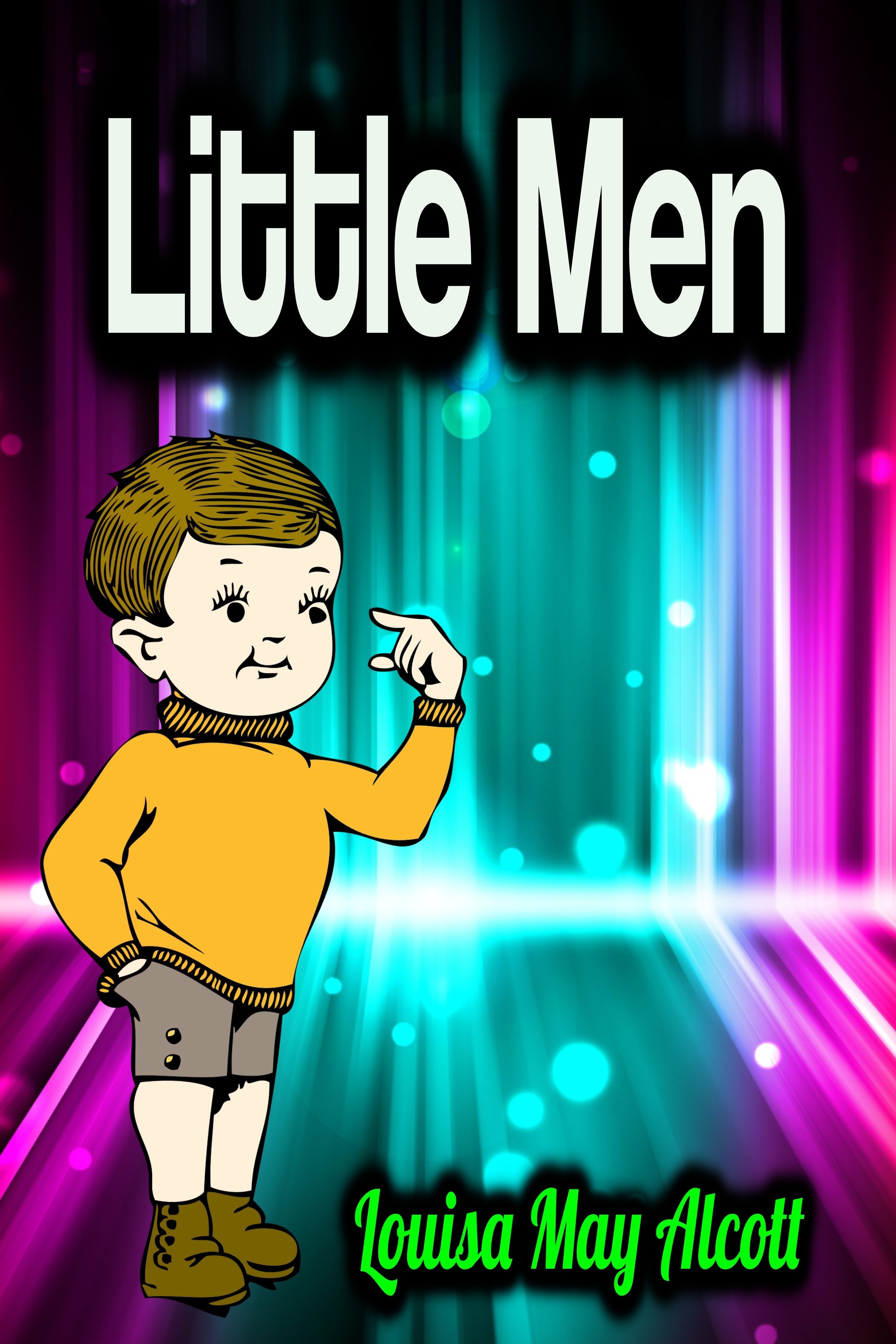
Little Men Louisa May Alcott - Little Men, or Life at Plumfield with Jo's Boys, is a novel by American author Louisa May Alcott, first published in 1871. The novel reprises characters from Little Women and is considered by some the second book in the Little Women Trilogy. The book recounts six months in the life of the students at Plumfield, a school run by Professor Friedrich and Mrs. Josephine Bhaer. The idea of the school is first suggested at the very end of part two of "Little Women", when Jo inherited the estate from her Aunt March.
This item is available online. Expand information to see details.
Dostęp do treści elektronicznej wymaga posiadania kodu dostępu, który można odebrać w bibliotece.
E-book
In basket
The Abbot's Ghost, or Maurice Treherne's Temptation - A Christmas Story - Louisa May Alcott - "The Abbot's Ghost, or Maurice Treherne's Temptation: A Christmas Story" by Louisa May Alcott is a classic, Christmas story. When Maurice Traherne saves Jasper's life and becomes temporarily crippled he hopes to win the love of Octavia and get Jasper's inheritance. But when Jasper's father dies and Traherne learns that he has been disinherited, he is forbidden to marry Octavia.
This item is available online. Expand information to see details.
Dostęp do treści elektronicznej wymaga posiadania kodu dostępu, który można odebrać w bibliotece.
E-book
In basket
Form of Work
The Borgias Alexandre Dumas - The Borgias There are dreadful -- perhaps scurrilous -- rumors about the Borgias of renaissance Italy, and here Dumas, author of such classics as THE THREE MUSKETEERS, in his Celebrated Crimes series, dishes up the dirt in all its ugly glory. This book was not written for children
This item is available online. Expand information to see details.
Dostęp do treści elektronicznej wymaga posiadania kodu dostępu, który można odebrać w bibliotece.
E-book
In basket
Form of Work
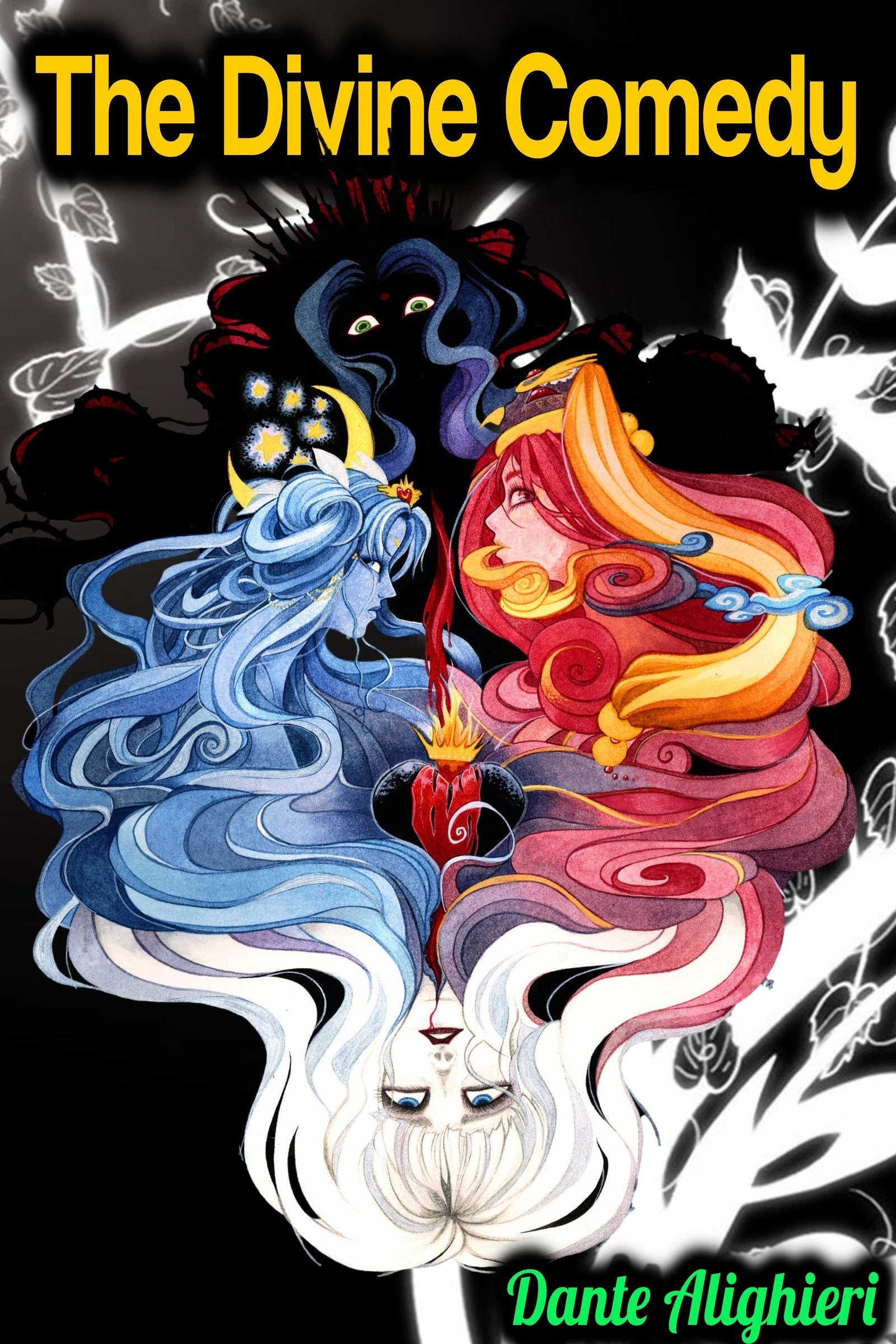
Die Göttliche Komödie Dante Alighieri - Drei Dinge prägten Werk und Leben Dante Alighieris (1265-1321): Seine mittelalterliche Universalbildung beim Enzyklopädisten Bruno Latini, die nach der Verbannung geschürte Haßliebe zu seiner Geburtsstadt Florenz und die entrückende Verehrung der schönen Beatrice Portinari, die sich durch ihren frühen Tod mit 24 Jahren zur Stilisierung nachgerade anempfahl. In den 100 Gesängen seiner im Exil verfassten Göttlichen Komödie (1307-1321) hat der Dichter über sie alle zu Gericht gesessen: Im 26. Höllengesang etwa findet sich eine erbitterte Schmährede auf die Heimatmetropole, und Latini muß bei den Sodomiten schmoren. Die himmlische Geliebte jedoch darf den verschämten Dichter im Paradies empfangen und mit ihm zu den Sternen, Planeten und Trabanten schweben. "Und Beatrice sah mich an voll Glut", heißt es im wundervollen Mondcanto, "die aus den hehren Augen blitzte wider, / Daß meine Kraft, besiegt, verließ der Mut, / Und fast verlor ich mich, die Augen nieder".Am Ende dieser schwindelerregenden Jenseitsreise säumten nahezu 600 Seelen des politischen, literarischen und mythologischen Lebens Dantes Weg, darunter Judas, Odysseus, Petrus und Bernard von Clairvaux. Zuvor aber hatte der Dichter als Figur des eigenen Epos gemeinsam mit seinem Führer, dem römischen Lieblingsdichter Vergil, Hölle (Inferno) und Fegefeuer (Purgato-rio) zu durchwandern: "Dort wirst Du hören der Verzweiflung Pein / Und sehn, wie sich der Vorzeit Geister quälen, / so daß sie nach dem zweiten Tode schrein". Dante hat sich die Architektur des Jenseits mit seinen 27 Stufen trichter- und terrassenförmig vorgestellt, um seinen unausweichlichen Sog zu illustrieren. Aber eigentlich ist der Strudel der Sprache der wahre Held des Buchs, der uns hineinzieht in die 14 233 bedeutendsten Verse der italienischen Literatur, ja in eines der größten Epen der Weltliteratur überhaupt.Goethe fühlte sich nicht wohl im "Moderduft aus Dantes Hölle", und Arno Schmidt gar sah im Inferno des Buchs Konzentrationslagerphantasien literarisch lodern. Die meisten Dichter aber dachten anders, und die Anfangserzählung von Samuell Beckett erster Prosaveröffentlichung Mehr Flügel als Prügel (1934) mit ihrem ironischen Titel Dante und der Hummer beginnt mit einem fesselnden Lektüreerlebnis der direkt dem Purgatorium entstiegenen Hauptfigur: "Es war Vormittag, und Belaqua hatte sich im ersten Mondcanto festgelesen. Bis zum Hals steckte er drin, er konnte weder vor noch zurück". Vor sieben Jahren etwa ging es mir beim Lesen ähnlich.--Thomas Köster
This item is available online. Expand information to see details.
Dostęp do treści elektronicznej wymaga posiadania kodu dostępu, który można odebrać w bibliotece.
E-book
In basket
Form of Work
This first volume of Robert Durling's new translation of The Divine Comedy brings a new power and accuracy to the rendering of Dante's extraordinary vision of Hell, with all its terror, pathos, and humor. Remarkably true to both the letter and spirit of this central work of Western literature, Durling's is a prose translation (the first to appear in twenty-five years), and is thus free of the exigencies of meter and rhyme that hamper recent verse translations. As Durling notes, "the closely literal style is a conscious effort to convey in part the nature of Dante's Italian, notoriously craggy and difficult even for Italians." Rigorously accurate as to meaning, it is both clear and supple, while preserving to an unparalleled degree the order and emphases of Dante's complex syntax.The Durling-Martinez Inferno is also user-friendly. The Italian text, newly edited, is printed on each verso page; the English mirrors it in such a way that readers can easily find themselves in relation to the original terza rima. Designed with the first-time reader of Dante in mind, the volume includes comprehensive notes and textual commentary by Martinez and Durling: both are life-long students of Dante and other medieval writers (their Purgatorio and Paradiso will appear next year). Their introduction is a small masterpiece of its kind in presenting lucidly and concisely the historical and conceptual background of the poem. Sixteen short essays are provided that offer new inquiry into such topics as the autobiographical nature of the poem, Dante's views on homosexuality, and the recurrent, problematic body analogy (Hell has a structure parallel to that of the human body). The extensive notes, containing much new material, explain the historical, literary, and doctrinal references, present what is known about the damned souls Dante meets --from the lovers who spend eternity in the whirlwind of their passion, to Count Ugolino, who perpetually gnaws at his enemy's skull--disentangle the vexed party politics of Guelfs and Ghibellines, illuminate difficult and disputed passages, and shed light on some of Dante's unresolved conflicts.
This item is available online. Expand information to see details.
Dostęp do treści elektronicznej wymaga posiadania kodu dostępu, który można odebrać w bibliotece.
The item has been added to the basket. If you don't know what the basket is for, click here for details.
Do not show it again